What Is AI Writing? A Plain-Language Guide for Founders
AI writing uses LLMs to draft and optimise text in minutes. Here's what it actually means for your blog, SEO strategy, and content workflow as a solo founder.

Most solo founders encounter the phrase “AI writing” the same way — buried in a tool’s marketing copy, somewhere between “10x your output” and a free trial button that expires in 48 hours.
Strip the pitch away and the definition is straightforward: AI writing is the use of large language models to generate, rewrite, and optimise text from a prompt. For founders, that translates to producing blog posts, landing page copy, and SEO articles in minutes rather than hours — without hiring a writer. Raw output still needs editorial judgement and a clear content strategy behind it before it has any realistic chance of ranking.
None of the top-ranked tools bother to explain why generic AI output and SEO-optimised content are not the same thing — and why that gap matters more for a solo founder running a DR 0 blog than it does for Grammarly or QuillBot. This guide covers what AI writing actually does inside the model, where it reliably saves time, where it quietly fails you, and how to choose a tool built around your content workflow rather than the broadest possible audience.
How AI writing actually works (without the jargon)
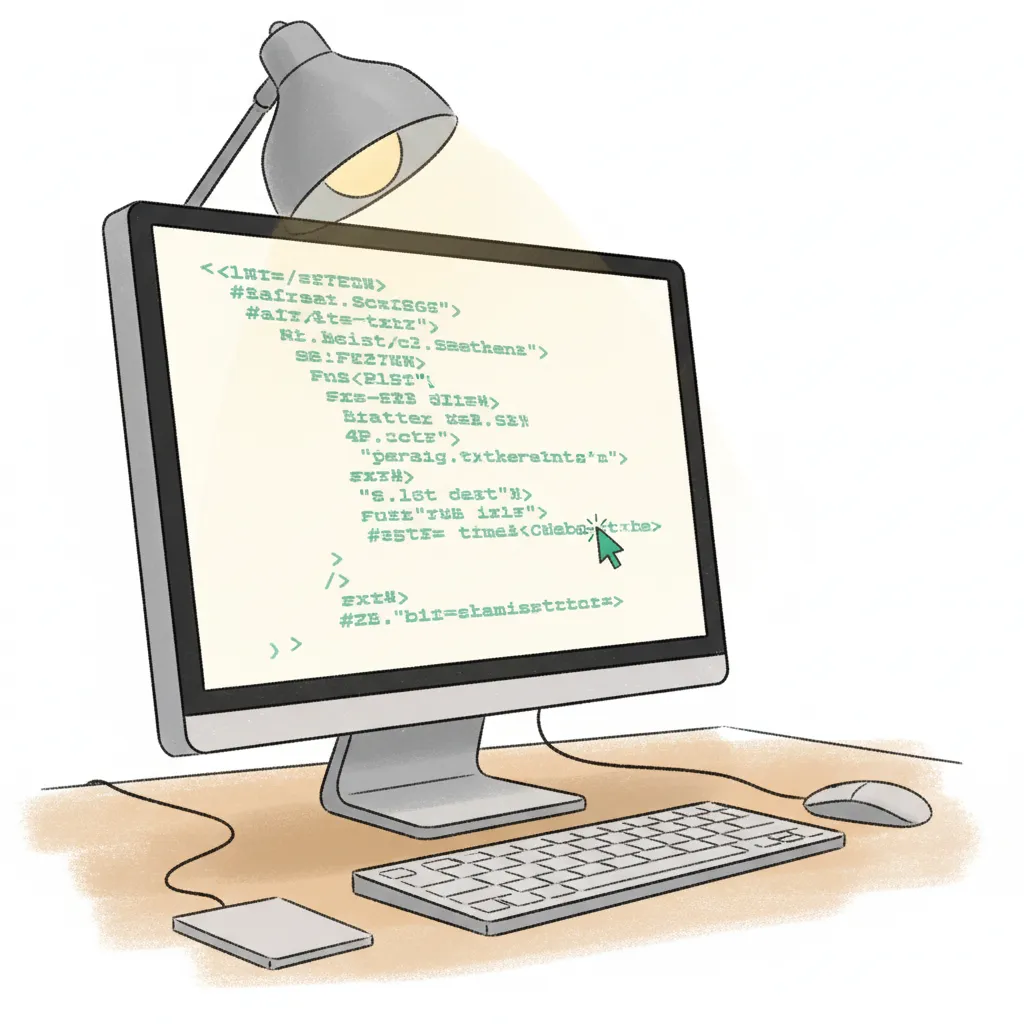
From prompt to paragraph: what happens inside the model
Picture a founder typing “write a 300-word intro for my SaaS blog about churn” into a text box and hitting enter. What fires next has nothing to do with a human ghostwriter on the other end. The model — a large language model trained on hundreds of billions of words of text — scans that prompt and begins predicting the most statistically probable next token, then the next, then the next, until a paragraph exists. No comprehension, no intent. Just pattern-matching at scale.
GPT-4-class models do this across billions of parameters trained on web pages, books, and code. The output feels coherent because the training data was coherent — the model learned that “churn” tends to live near “retention,” “MRR,” and “cancellation emails,” so those concepts surface without anyone programming them in. Genuinely fast. Not magic.
Why outputs vary so widely between tools
Type the same prompt into Jasper, Grammarly’s AI writer, and a raw ChatGPT session and you’ll get three meaningfully different results — sometimes in quality, almost always in tone. Each product applies different fine-tuning, different safety guardrails, and different post-processing layers on top of the base model. Jasper is tuned for enterprise marketing cadences. Grammarly’s model has been shaped around grammar correction patterns. A raw API call has almost no shaping at all.
The base model is roughly the same engine. Fine-tuning is the gearbox. Choosing a tool for a specific job — SEO articles, landing page copy, academic drafts — matters more than picking whichever product ran the most LinkedIn ads this month.
What AI writing tools can and can’t do for your blog
Tasks where AI writing saves real time
The AI Overview for this query lists three core functionalities where the time savings are real and measurable: content generation, text optimisation, and research assistance. For a solo founder, that maps to a specific short list of tasks worth handing off.
| Task | What AI handles well | Why it’s fast |
|---|---|---|
| Blog post outlines | Structure, H2/H3 hierarchy, section order | Format is predictable; no judgment required |
| Email templates | Subject lines, nurture sequences, onboarding copy | Repeatable pattern with low factual risk |
| Product descriptions | Feature-to-benefit translation, variation generation | High volume, low stakes per unit |
| First-draft intros | Opening paragraphs from a single-sentence brief | Kills blank-page paralysis in under 60 seconds |
These are tasks where the format is fixed and accuracy is easy to verify. Output may need a line edit. But the heavy lifting — staring at an empty document — is gone.
Where AI writing falls short without human input
Hand the same tool a task that requires lived experience, a specific data point, or a genuinely contrarian opinion and the cracks show fast. The PAA data for this query is direct: AI writing “can generate plausible-sounding but factually incorrect statements and lacks the lived experience or judgment needed for truly authoritative or emotionally resonant writing.”
That’s the real dividing line — not word count or topic complexity. Original research, founder-specific stories, and any claim that needs a named source all require a human to supply the raw material. The model can shape the sentence. It cannot invent the fact behind it.
AI writing for SEO: why generic output doesn’t rank
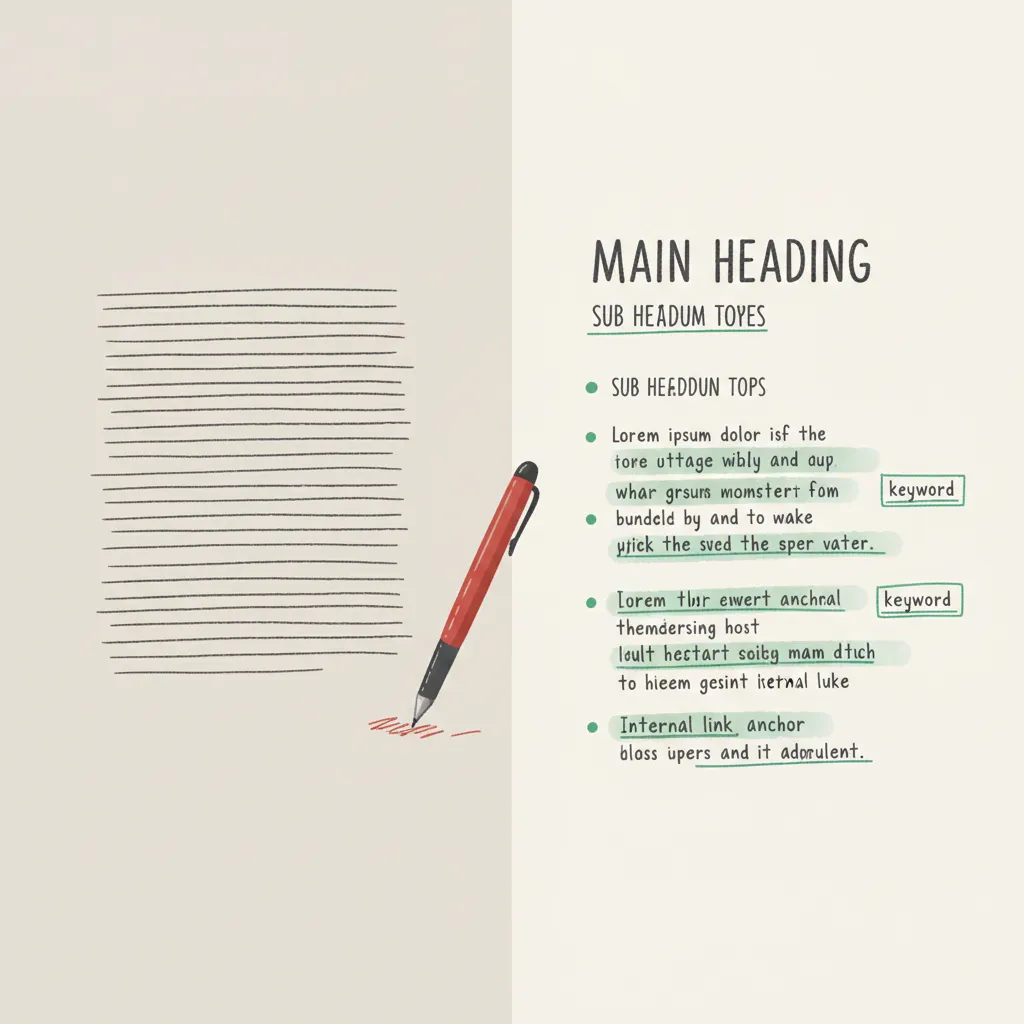
Nine of the top 10 results for “ai writing” are tool landing pages — QuillBot, Grammarly, DeepAI, Microsoft — and not one of them explains how a generated draft becomes a page that actually ranks. That gap is exactly where solo founders get burned.
The difference between generated content and SEO-optimised content
A raw AI draft is output shaped by a prompt. An SEO-optimised article is output shaped by a prompt plus a search intent audit, a target keyword map, a heading hierarchy, and internal link placement. Four separate decisions the model doesn’t make for you.
The PAA data for this query spells it out plainly: “AI-generated content is raw draft text produced from a prompt, while SEO-optimised content has been deliberately structured with target keywords, proper heading hierarchies, and search intent alignment — steps that typically still require human editorial oversight.” None of the top-ranked competitors answer that distinction on their pages. They pitch speed and skip the gap between “draft exists” and “draft ranks.”
For a founder writing a blog post, that gap is where most content dies.
What site-aware AI writing looks like in practice
A site-aware tool doesn’t start with the prompt — it starts with a read of your existing content: what topics you’ve already covered, what internal links exist, where your authority is thin. Instadraft runs an SEO audit before generating a draft, so the output is scoped to your site’s actual state rather than a blank-slate generic article.
That’s a different workflow from typing into Grammarly or QuillBot and hoping the result fits your content strategy. Before picking a tool, check out the best AI tools for content creation to see how site-aware drafting compares to generic generation side by side — or try Instadraft free to see the audit-first approach on your own site.
Choosing the right AI writing tool as a solo founder
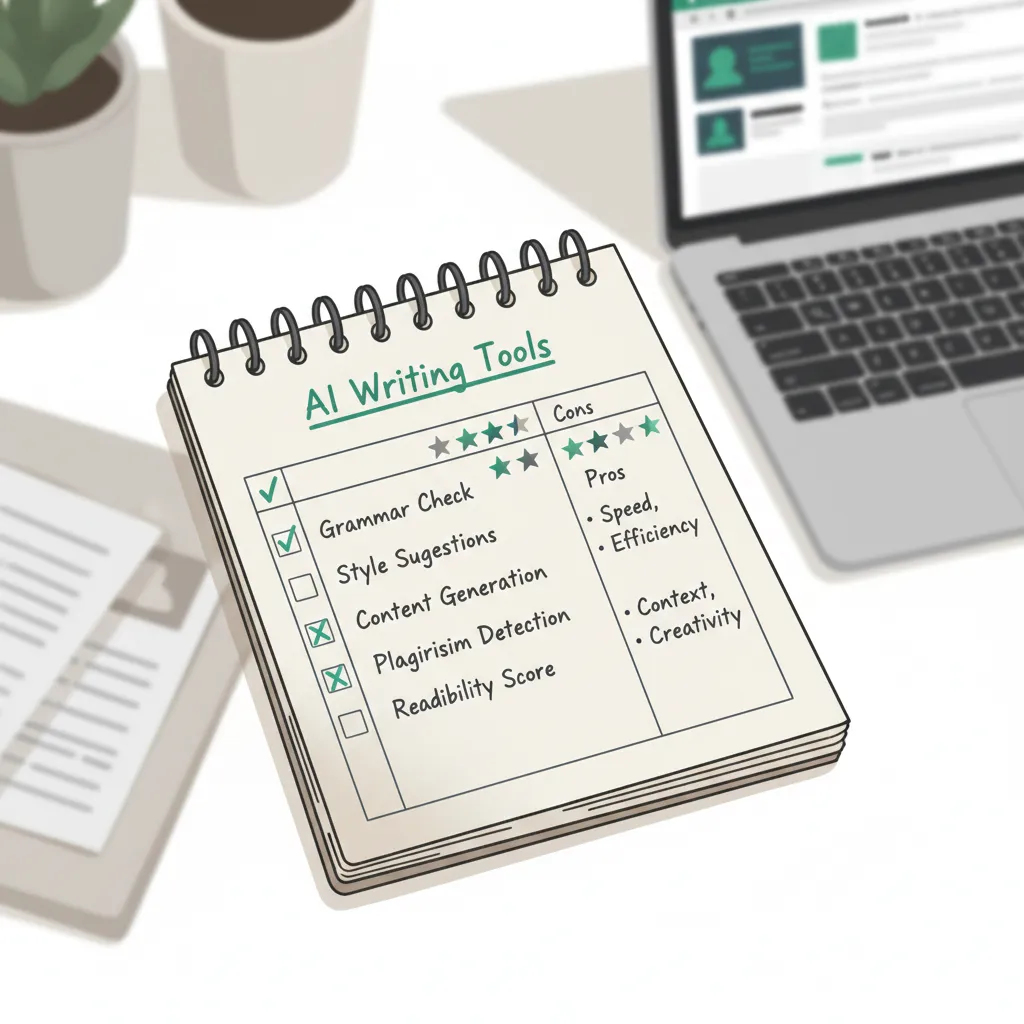
You’re three tabs deep in browser windows — Jasper’s pricing page, QuillBot’s FAQ, a Reddit thread from someone asking which tool doesn’t watermark outputs. Forty minutes gone, and you still haven’t written the post you opened your laptop to write.
The evaluation trap is real, and most AI writing tool marketing makes it worse. Vague superlatives, no underlying model disclosed, free tiers buried behind a credit counter that hits zero on your second draft.
Questions to ask before picking a tool
Before touching a free trial, get specific about your actual workflow. The PAA data for this query points to five honest filters:
- Does it fit your use case — SEO blog posts, not scripts or academic papers?
- What does the free tier actually produce, and at what word-count cap?
- Does it integrate with your publishing stack, or does it add a copy-paste step?
- How does output quality hold up on a topic where you can verify the facts?
- Can it match your brand voice, or does every draft sound like the same generic newsletter?
Red flags in AI writing tool marketing
If a tool’s homepage says “industry-leading” with no data behind it, that’s the first red flag. The second: zero mention of accuracy limits — any honest tool acknowledges it can produce plausible-sounding but factually wrong sentences. Third is no free trial at all, or a trial gated behind a credit card before you’ve seen a single output.
The top-ranked tools in this SERP — Grammarly, QuillBot, DeepAI — none of them explain what model powers their output or what to do when the draft is wrong. That’s not a minor omission; it’s the detail that costs you an hour of fact-checking post-publish. Check our full breakdown in the best AI tools for content creation roundup if you want tool-by-tool comparisons.
Copyright, plagiarism, and accuracy: what founders need to know
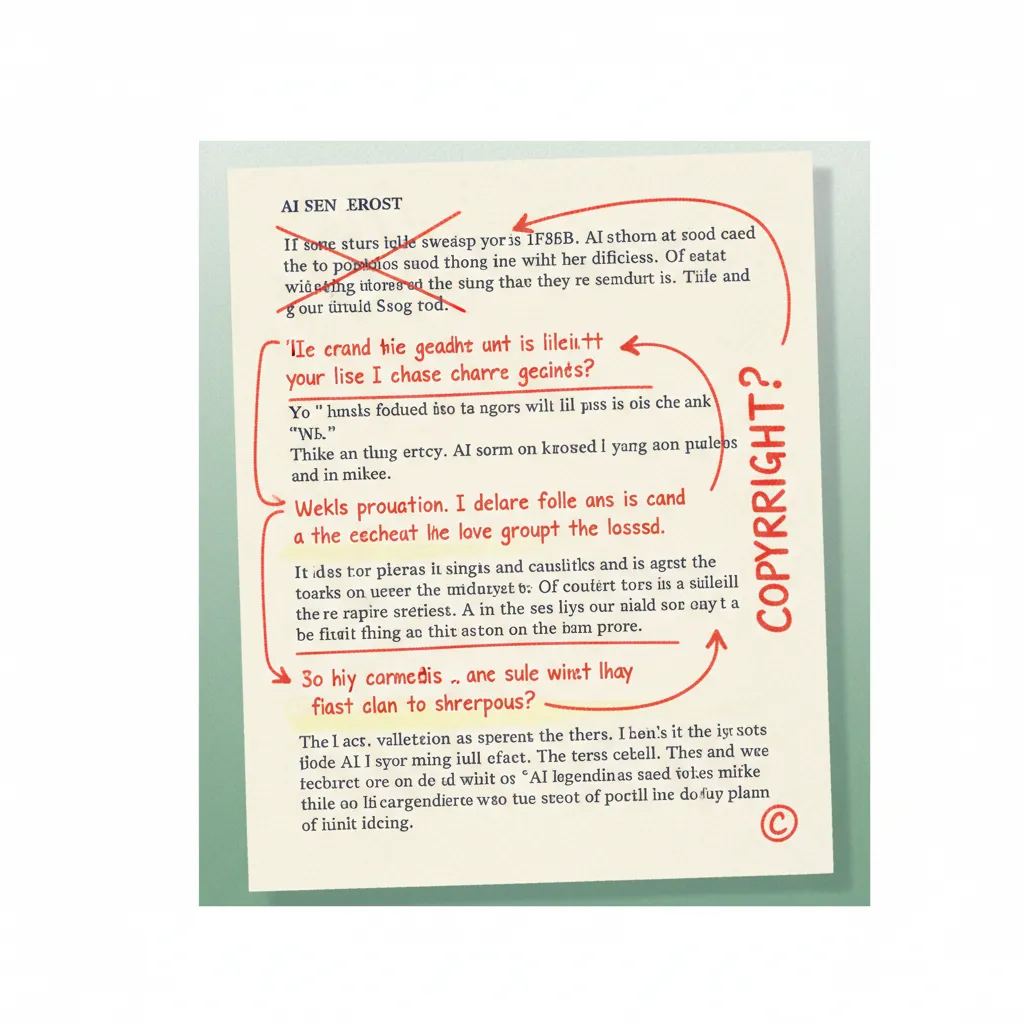
Most AI writing tool pages — QuillBot, Grammarly, DeepAI — skip copyright entirely. The received wisdom is that this is a legal edge case, something to worry about later. It isn’t.
Who owns AI-generated text?
The Authors Guild is direct: purely machine-generated text cannot hold legal copyright protection. A blog post you publish without meaningful human editing may land in the public domain the moment you hit publish — no IP protection, no recourse if a competitor scrapes and republishes it verbatim. The fix is editorial involvement, not a disclaimer in your footer. Rewrite the structure, add your own examples, change the argument. The more transformation you apply, the stronger the claim that a human author produced the work.
Note: AI-generated text cannot hold legal copyright. Human editing isn’t optional polish — it’s what makes the content yours.
This matters more for founders than for enterprises. A solo SaaS blog is often the only moat between you and a competitor with a larger ad budget.
How to fact-check and edit AI output before publishing
AI writing tools generate statistically plausible text, not verified facts. A draft can confidently cite a statistic that doesn’t exist, or attribute a quote to the wrong person, and the sentence will read perfectly. The check is mechanical: open a second tab, verify every named claim against a primary source, and run the final draft through a plagiarism tool before scheduling.
Three things every founder should do before hitting publish:
- Verify every stat and named entity against its original source.
- Run the draft through a plagiarism checker (Grammarly’s built-in tool covers this step).
- Rewrite at least the intro and conclusion in your own voice — both for copyright and for tone.
The AI draft is a starting point. Publishing it raw is an editorial and legal shortcut you can’t afford.
Frequently asked questions
Why do outputs vary so widely between different AI writing tools?
Different tools are built on different underlying models, trained on different datasets, and fine-tuned with different tone, style, and safety guardrails. Send the same prompt to QuillBot, Jasper, and a generic GPT wrapper and you’ll get three meaningfully different drafts — because each system has been shaped by different decisions about what “good output” means, long before you typed a word.
Which tasks does AI writing save the most time on?
Structured, repeatable tasks see the biggest gains: email templates, blog outlines, product descriptions, meta descriptions, and social copy. These formats are predictable, so the model has a strong prior to work from. Open-ended tasks — original analysis, first-person narrative, expert opinion — still require substantial human input and rarely save as much time as the marketing copy suggests.
Where does AI writing fall short without human input?
Factual accuracy is the clearest failure mode. Models generate statistically plausible text, not verified claims — which means a polished-sounding paragraph can contain figures that are wrong, studies that don’t exist, or conclusions that contradict your source material. No AI writing tool replaces a fact-check pass before publishing, especially on technical or data-heavy topics.
What is the difference between AI-generated content and SEO-optimised content?
AI-generated content is a draft — words arranged into sentences from a prompt. SEO-optimised content has been deliberately structured around a target keyword, a specific search intent, a heading hierarchy, and internal linking logic. The gap between the two is editorial work, and most generic AI writers don’t close it. Tools that audit your site before drafting — checking what you already rank for, what gaps exist — produce output that’s closer to publishable from the start.
What does site-aware AI writing look like in practice?
Rather than generating from a blank prompt, a site-aware tool reads your existing content, your ranking keywords, and your brand voice before it writes a word. The output references your actual topic clusters, avoids duplicating angles you’ve already covered, and uses terminology consistent with your other posts. The practical result is a draft that needs structural editing rather than a full rewrite.
What are red flags in AI writing tool marketing to watch out for?
Vague superlatives with no supporting data (“industry-leading quality”), no disclosure of which underlying model powers the tool, and complete silence on accuracy limitations or copyright considerations. If a tool’s landing page has no free-tier usage caps listed and no mention of fact-checking or plagiarism risks — as is true of several top-10 competitors in this space — treat the marketing as incomplete, not authoritative.
Who owns AI-generated text?
Purely machine-generated text cannot hold legal copyright protection, according to the Authors Guild. Content produced without meaningful human authorship may sit in the public domain — anyone can use it. Substantial human editing and transformation can restore copyright eligibility, but the threshold for “substantial” isn’t yet settled law. For founders building a content moat, this is an argument for editing AI drafts heavily, not publishing them raw.