AI Rewrite Tools Compared: Which One Actually Improves Your SEO (Not Just Your Grammar)
Most AI rewrite tools fix grammar, not rankings. See which tools actually help your SEO — and when rewriting alone isn't enough.
Four months after publishing, your post has 800 impressions in Search Console and a 1.2% click-through rate — and running it through QuillBot made zero difference to either number.
That’s the gap most AI rewrite tools don’t advertise: they fix sentences, not rankings. The SEO signals that actually move the needle — keyword placement, topical depth, internal linking, heading structure — go completely untouched by every paragraph rewriter in the top-10 SERP. QuillBot and Grammarly will make your prose cleaner. They won’t tell Google your content deserves page one.
This article runs the five most-used AI rewrite tools (QuillBot, Grammarly, Ahrefs, Canva Magic Write, and Rewritify) through a single filter: do they actually improve your chances of ranking, or just your readability score? That answer shapes everything about which tool you reach for — and when rewriting isn’t the move at all.
Why rewriting your content doesn’t automatically improve your rankings
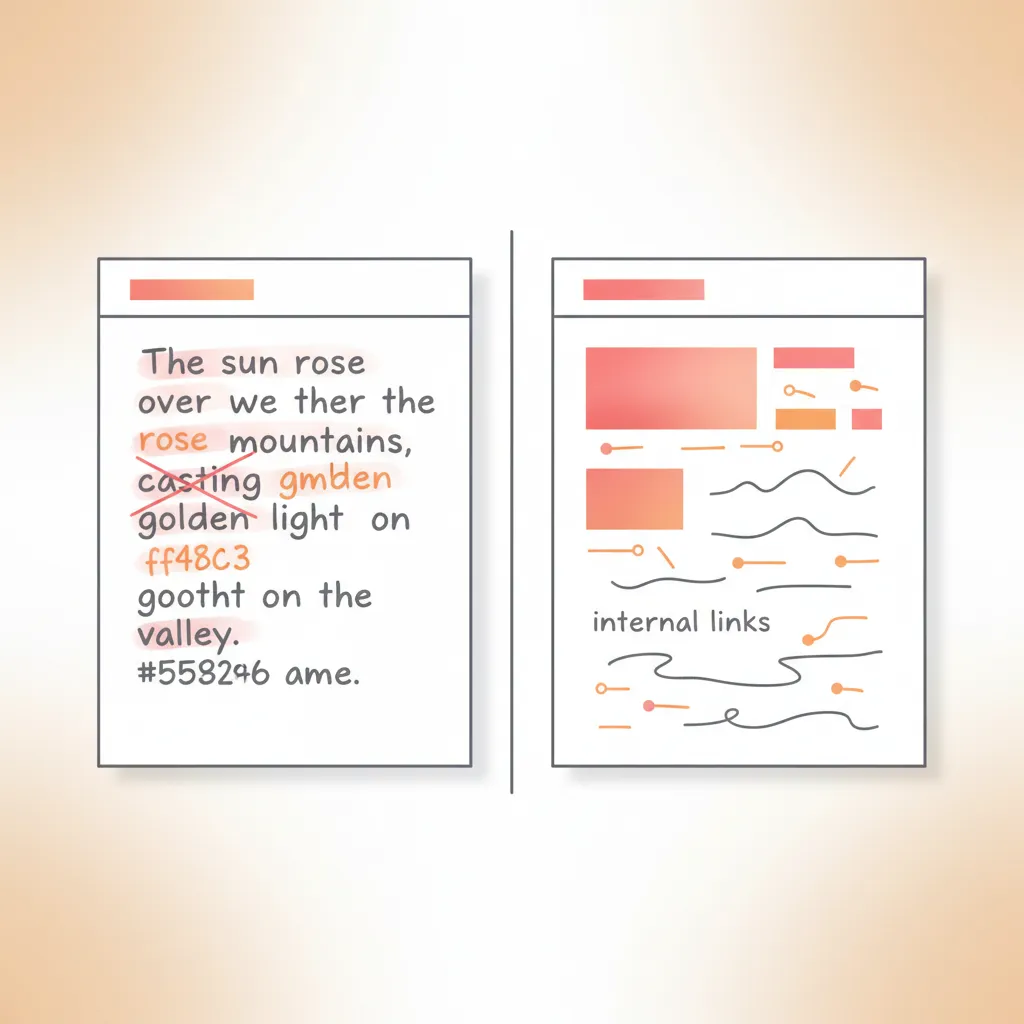
What AI rewriters actually change (and what they leave untouched)
A founder ran a 1,200-word post through QuillBot’s paragraph rewriter — twice. The second version read smoother. Shorter sentences, cleaner vocabulary, less passive voice. She published the update and waited six weeks. Impressions: flat. Clicks: identical. Position in Search Console: unchanged.
QuillBot touched surface prose — sentence structure, synonym swaps, fluency. What it never touched was anything Google’s algorithm weighs when deciding where to rank the page. That’s not a criticism of QuillBot specifically; it’s what every paragraph rewriter in the top-10 SERP is built to do. Ahrefs’ rewriter page (~668 words of editorial content) implies SEO awareness because of the brand, but its tool rewrites text the same way the others do: sentence by sentence, with no awareness of the page’s strategic context.
The SEO signals no paragraph rewriter touches: keyword intent, structure, internal links
Four signals determine whether a page ranks or stagnates, and none of them live inside your prose:
- Keyword intent alignment — does the page match what a searcher actually wants at query stage?
- Heading structure — do H2s and H3s map to the subtopics Google sees in top-ranking results?
- Internal links — does the page receive link equity from related posts, and does it pass equity onward?
- Topical depth — does the content cover the subject completely enough to satisfy the query?
Grammarly’s rewriter is genuinely good at tone adjustment and real-time grammar correction. But its own product page has no mention of keyword intent — because the tool doesn’t touch it. Neither does Ahrefs’, despite the SEO-adjacent branding. Rewriting for fluency and rewriting for rankings are two different jobs. Most tools are only built for one of them.
The 5 most-used AI rewrite tools — and their real SEO limitations
| Tool | Best for | SEO awareness | Free tier |
|---|---|---|---|
| QuillBot | Vocabulary control, academic paraphrasing | No | Yes (limited modes) |
| Grammarly | Real-time tone + grammar fixes | No | Yes (usage caps) |
| Ahrefs Paragraph Rewriter | Readability, multiple text variations | Surface-level only | Yes |
| Canva Magic Write | Captions, short copy in design docs | No | Yes (50 uses/month) |
| Rewritify / RewriteAI | Bypassing AI content detectors | No | Yes |
QuillBot: best vocabulary control, blind to keyword strategy
QuillBot’s own positioning says it plainly: it’s “best for customizable vocabulary changes, academic paraphrasing, and adjusting fluency.” That’s a precise description of what it does — and a precise description of what SEO is not. No keyword-intent settings. No heading awareness. No signal to the tool that your target phrase needs to land in the first 100 words. Millions of people use it to write cleaner sentences, and cleaner sentences don’t move rankings.
Grammarly: real-time tone fixes, no ranking intelligence
Grammarly lists 8 distinct user personas on its rewriter page — professionals, students, journalists, marketers, and more. Not one of those personas is “founder trying to rank for a competitive informational query.” The tool is exceptional at ambient editing inside your active workspace, but its rewriter has no concept of keyword placement, topical depth, or why two articles on the same subject rank differently.
Ahrefs Paragraph Rewriter: closest to SEO-aware, still surface-level
Ahrefs implies SEO-awareness by brand association. The product page (~668 words, mostly tool embed) mentions “SEO-optimized copy” as a use case — without the tool actually reading a SERP. It produces a cleaner variation of your paragraph. It will not tell you whether that paragraph addresses the right subtopic for your target query.
Canva Magic Write: captions and short copy only — not built for articles
Canva positions Magic Write for sentences and captions inside design documents. Pasting a 1,000-word article draft into it is using the wrong tool for the job — output is optimized for visual context, not search context.
Rewritify / RewriteAI: bypasses AI detectors, irrelevant to ranking signals
Rewritify and RewriteAI are built for one specific job: making AI-generated text read as human-written to detection tools. That capability has nothing to do with the ranking signals Google actually measures — keyword intent, heading structure, topical coverage, internal linking.
Sentence rewriters vs. paragraph rewriters — and what the free tiers actually give you
“Sentence rewriter” and “paragraph rewriter” describe the same category at different scopes. Sentence-level tools — QuillBot, Wordtune, Ahrefs’ sentence rewriter, Semrush’s AI Rewriter — reword one line at a time; paragraph rewriters run the same logic across a whole block. Neither changes a single ranking signal. Choosing between them is a question of editing scope, not SEO.
On the free tiers, the pattern is identical across every major tool:
- Undisclosed caps. Ahrefs, QuillBot, Grammarly, and Scribbr publish no word or character limit on the tool page itself — you find the wall mid-draft.
- Locked modes. Persuasive, academic, creative, and formal registers sit behind paid tiers. Free plans give you one or two generic rephrasing modes (Semrush is the outlier, with six).
- No memory. Free rewriters don’t retain your brand voice, your site, or your previous drafts — every session starts cold, which is exactly the context an SEO-first workflow depends on and a rewriter can’t provide.
For a one-off polish of a single paragraph, a free rewriter is genuinely enough. The moment you’re publishing at any cadence, the missing layer — keyword intent, structure, internal links — is the work that actually moves rankings, and no free rewriter tier touches it.
What an SEO-first rewrite actually requires

Zero of the top 10 ranking pages for “ai rewrite” include a content brief step. Not one. Every tool — Ahrefs, Grammarly, QuillBot — assumes you already have text worth optimizing. That assumption is where most founder rewrites go wrong before they start.
Starting from a content brief, not a raw draft
A content brief answers three questions before you write a word: what keyword you’re targeting, what format the SERP rewards, and which subtopics the top-ranking pages cover. Without those answers, an AI rewriter is editing a document that was never aimed at the right target. You get polished prose that still misses the intent Google is trying to satisfy. The AI Content Brief Generator explains the format in detail — the short version is that a brief takes 10 minutes and saves you from a rewrite that changes everything except what matters.
Matching search intent before touching prose
Search intent isn’t vague — it’s the specific content format, angle, and depth that Google’s top results already demonstrate. For a keyword like “ai rewrite tools,” every top-5 result is a free-tool landing page. A 2,000-word narrative post will fight that pattern no matter how well it’s written. Before touching a sentence, check whether your post’s format, heading structure, and content type match what’s actually ranking.
Internal links and heading structure: the parts rewriters skip
All three of the top-ranked rewriter tools — Ahrefs at ~668 words, QuillBot at ~653 words — have zero editorial guidance on heading hierarchy or internal link strategy. That’s not a coincidence; those features are outside what a paragraph rewriter does. Heading structure signals topical depth to crawlers. Internal links distribute authority between posts. Neither gets fixed when you paste text into a rewriter box, and an SEO-first draft builds both in from the start rather than bolting them on after the fact.
When a rewrite is the right move — and when it isn’t
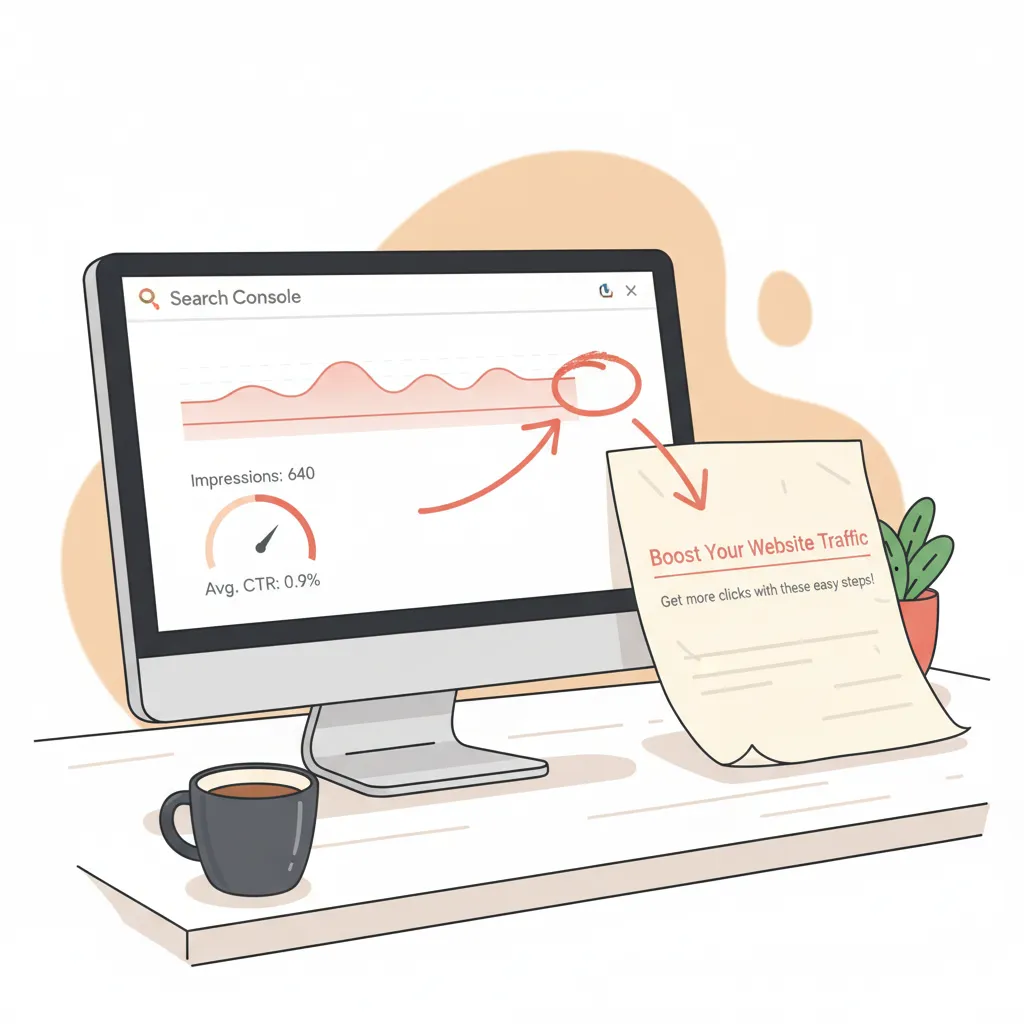
Picture this: you published a post on AI onboarding emails 4 months ago. Google Search Console shows 640 impressions a week, but your click-through rate sits at 0.9%. You paste the intro into QuillBot, hit “Fluency” mode, and the prose genuinely improves — shorter sentences, no passive voice, cleaner transitions. You republish. Three weeks later, impressions: 640. CTR: 0.9%.
That’s not a writing quality problem. That’s a structure problem, and no ai rewrite tool fixes it.
Signs your content needs a structural overhaul, not a polish
Watch the gap between impressions and clicks. Impressions mean Google is indexing the page for a query — it’s already finding you. A sub-1% CTR means your title or meta description doesn’t match what the searcher actually wants, which points straight back to keyword intent and heading structure — the two things every paragraph rewriter, from Grammarly to Ahrefs, leaves completely untouched.
Other signs a rewrite won’t rescue the post:
- Your H2s describe your narrative, not the questions searchers are typing
- You have zero internal links pointing to or from the post
- The page targets a keyword phrase that doesn’t match the dominant content format in the SERP (e.g., you wrote a story when the top 5 results are all step-by-step guides)
Cleaner prose doesn’t fix any of those. It just makes a structurally wrong page read better.
The faster path: writing SEO-first from a brief instead of retrofitting
Retrofitting SEO onto an existing post costs more time than the post is worth — you’re re-researching intent, rewriting H2s, adding internal links, and adjusting the angle, all after the fact. Starting from a content brief that maps keyword intent, heading structure, and topical depth before a single sentence is written skips the retrofit entirely. The AI Content Brief Generator covers exactly what that brief needs to contain — it’s the step that separates posts that rank from posts that just read well.
Choosing the right tool for your goal as a founder

Every tool landing page — QuillBot, Grammarly, Ahrefs — frames rewriting as the obvious starting point for better content. That frame is wrong for about half the situations founders actually face.
Use a rewriter if: you have strong SEO structure and just need prose polish
If your post already targets a clear keyword, covers the subtopics Google wants to see, carries internal links to related content, and uses a heading structure that matches the SERP’s dominant format — a rewriter genuinely helps. QuillBot’s fluency mode, Grammarly’s real-time tone adjustments, or Ahrefs’ variation generator can tighten the prose without touching anything structural (the sentence-rewriter and free-tier breakdown above covers which tools do this best). That’s the right use case: you’ve done the SEO work, and you want the sentences to land better on a human reader.
The signal to look for: your post gets clicks, your bounce rate is high, and readers don’t convert. That’s a prose problem, not a ranking problem.
Use an SEO-first writer if: your posts aren’t ranking after 3+ months
If Search Console shows impressions under 200 per week after 90 days, the issue almost certainly isn’t sentence quality. It’s that the post doesn’t match keyword intent, lacks topical depth, or misses the heading structure the top-3 results use. Passing that post through any of the 5 tools in this article changes none of those signals.
At that point, rewriting is repainting a house with a cracked foundation. Starting fresh from a content brief built around the actual SERP is faster — something covered in more depth in our AI tools for SEO content writing guide, the AI Content Brief Generator, and the best AI tools for content creation roundup. Instadraft’s SEO-first draft workflow handles that starting point, so the structure is right before a single sentence gets polished.
Frequently asked questions
What do AI rewriters actually change in your text, and what do they leave untouched?
AI rewriters restructure sentences, swap vocabulary, and adjust tone — the surface layer of your content. The underlying architecture stays completely intact: keyword intent, heading hierarchy, internal links, and topical depth are untouched. A post that wasn’t targeting the right search intent before a QuillBot pass still isn’t targeting it after. Fluency improvements are real; ranking improvements are not.
What SEO signals does a paragraph rewriter not address?
Four signals drive rankings that no paragraph rewriter touches: keyword intent alignment, heading structure, internal linking, and topical depth. These are the on-page elements Google’s crawlers use to understand what a page is about and who it should rank for. Rewriters optimize for how content reads, not for what search queries it should answer — a fundamental mismatch for any founder trying to move rankings.
Is QuillBot good for SEO rewriting?
QuillBot is excellent at what it’s built for — vocabulary customization, academic paraphrasing, and fluency adjustment. For SEO, it’s surface-level: the tool has no awareness of keyword strategy, search intent, or structural signals. Running a post through QuillBot’s “Fluency” or “Creative” modes produces cleaner prose; it does nothing to close gaps in topical coverage or fix misaligned heading hierarchies.
Does Grammarly’s rewriter help with SEO?
Grammarly fixes grammar, restructures sentences for clarity, and adjusts tone in real time inside your existing workspace — genuinely useful for readability. It has no keyword awareness and no ranking intelligence. It won’t tell you that your H2s don’t reflect the sub-topics searchers expect, or that you’re missing internal links that would distribute PageRank across your site. Polish, yes. Rankings, no.
Is Ahrefs’ paragraph rewriter the most SEO-aware tool?
Among the free tools covered here, Ahrefs’ rewriter comes closest — it mentions “SEO-optimized copy” as a use case, which no other free rewriter does. Still, it operates at the prose level. It doesn’t analyze your target SERP, check keyword placement, or flag structural gaps. The SEO branding reflects Ahrefs’ authority in the space, not a meaningfully different rewriting capability.
Can AI rewriting tools like Rewritify or RewriteAI help your content rank better?
Rewritify and RewriteAI are built to bypass AI content detectors by making text sound more human — a specific, narrow problem that has no direct relationship to search rankings. Evading an AI detector doesn’t improve keyword intent, heading structure, or topical coverage. If your content isn’t ranking, humanizing its phrasing won’t change that outcome.
Should you start an AI rewrite from a content brief or a raw draft?
A brief aligned to search intent tells you which keywords to target, what sub-topics to cover, and how to structure headings before a single word is written or rewritten. Starting from one produces better results every time. AI rewriters can’t inject that strategic layer retroactively — they can only work with what’s already on the page. Rewriting a structurally weak draft just produces a more readable structurally weak draft.
Is Canva Magic Write suitable for rewriting full articles?
No — Canva Magic Write is built for short copy: captions, sentences, and design-document text. It’s optimized for the context in which it lives (a visual design tool), not for 1,000-word blog posts where heading structure, keyword placement, and internal linking all matter. Using it for long-form article rewrites is working outside its intended scope, and the output reflects that.